 ChefPit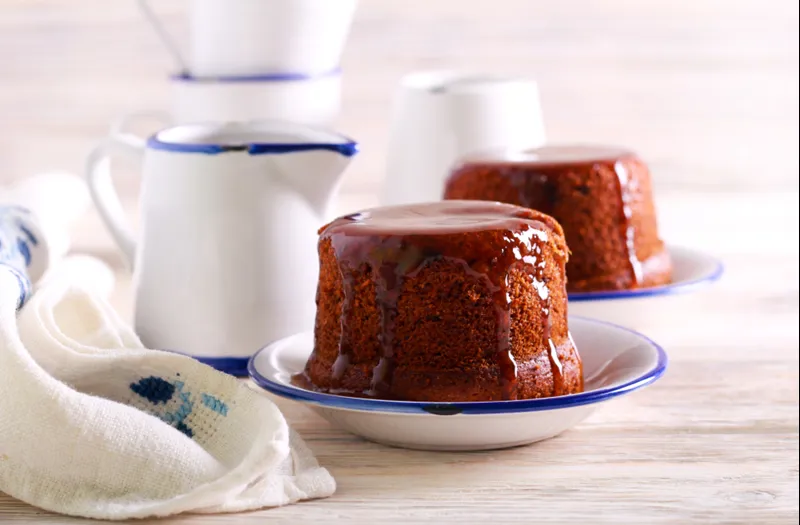

The Cartmel Village Shop in Cumbria popularised its own version in the 1990s and sometimes markets it as ‘the original,’ but most historians credit the earlier Sharrow Bay recipe.
Difficulty
4/10
Time
1 hour 15 minutes to 1 hour 45 minutes
This British comfort food classic takes the humble date, often relegated to fruitcake duty, and transforms it into the star of a moist, tender sponge cake that gets thoroughly drenched in buttery toffee sauce.
There's magic in the dates, which break down during baking to create pockets of concentrated sweetness throughout the cake, while keeping everything incredibly moist. Then comes the sauce, which isn't just poured on top but actually soaks into the warm sponge, creating layers of flavor and texture that make each bite different from the last.
It's the kind of dessert that makes you understand why the British have such strong opinions about proper puddings.
Typical Ingredients

Medjool dates
Pitted and chopped, the key to moisture and flavor

Boiling water
For softening the dates

Baking soda
Creates the tender texture

Butter
Unsalted, room temperature for the sponge

Brown sugar
Dark brown for deeper molasses flavor

Eggs
Large, room temperature

Self-raising flour
Or plain flour with baking powder

Vanilla extract
Pure, not artificial

Heavy cream
For the toffee sauce
More butter
For the sauce (yes, more butter)
More brown sugar
The sauce needs its own supply
What Makes This Dish Good?
Sticky toffee pudding’s brilliance lies in its simple yet complex texture. The sponge is light but packed with rich, sweet pockets of date flavor.
The toffee sauce brings depth—it soaks into the base, pools at the edges, and coats the top for instant delight. Every bite blends warm spices, buttery toffee, and comforting fullness. This dessert improves with time, as flavors meld and the sauce soaks in.
Served warm with cold cream or ice cream, the temperature contrast makes it irresistibly good.
Common Substitutions
Regular dates for Medjool
Any soft dates work, just chop them smaller
Muscovado sugar for brown sugar
More complex molasses flavor

Buttermilk instead of some cream
Adds a pleasant tanginess that cuts through the richness. Note that this substitution is for the cake batter, not the toffee sauce, and will result in a slightly lighter, more tender crumb.
Chopped walnuts or pecans
Traditional addition for texture

Brandy or rum in the sauce
Adult version for special occasions

Coconut cream for dairy cream
Works surprisingly well for dairy-free versions

Maple syrup mixed with brown sugar
Adds complexity to the sauce
Plain flour plus baking powder
1 tsp baking powder per cup of flour if no self-raising
History and Origin
The sticky toffee pudding story is messier than most pastry histories, with claims and counterclaims that would make food historians weep into their research notes. The most widely accepted version credits Francis Coulson of the Sharrow Bay Country House Hotel in England's Lake District, who supposedly created the dish in the 1970s. But like many "invented" dishes, sticky toffee pudding probably evolved rather than appeared fully formed.
The technique of soaking dates and incorporating them into cakes has deep roots in British baking, where dried fruits were often used to add moisture and sweetness to otherwise plain sponges. Some food historians trace similar recipes back to wartime rationing, when dates provided sweetness when sugar was scarce. The "sticky" element - pouring sauce over cake - has even older precedents in traditional British puddings.
The Canadian connection muddies the waters further. Coulson claimed he received the recipe from a Canadian guest, Patricia Martin, who had supposedly been making it for years. Whether this represents the true origin or just the natural evolution of similar ideas across different countries remains disputed. What's certain is that by the 1980s, sticky toffee pudding had become a British restaurant staple, and by the 1990s, it was appearing on menus worldwide.
The dish's rapid rise from regional specialty to international comfort food classic says something about its fundamental appeal - sometimes simple combinations of butter, sugar, and fruit create magic that transcends borders.
Best Served With / Pairing Suggestions

Vanilla ice cream
The classic pairing!
Clotted cream
Rich and traditional, if you can find it
🍽️
Custard
Warm or cold, classic British comfort

Salted caramel ice cream
Doubles down on the toffee flavors
🍽️
A drizzle of single cream
Simple and lets the pudding shine

Strong black coffee
Cuts through the sweetness beautifully

Port or sweet sherry
Traditional British dessert wine pairing

Nothing at all
Sometimes perfection needs no accompaniment
Did You Know?
Sticky toffee pudding rose to near-ubiquity on gastropub menus in the 1990s and 2000s, sometimes overshadowing (though not fully displacing) older classics such as spotted dick and treacle tart.
The dish gained international fame partly through British gastropubs opening worldwide in the 1990s
Some high-end restaurants serve deconstructed versions with date dust, toffee spheres, and foam - missing the entire point
The addition of bicarbonate of soda to the date soaking liquid is crucial - it helps break down the dates and creates the pudding's characteristic dark color
Sticky toffee pudding has spawned numerous variations: sticky gingerbread pudding, sticky banana pudding, and even sticky toffee flavored everything from ice cream to cookies
The dish is sometimes called "sticky date pudding" in Australia and New Zealand, where it's equally beloved
Controversies
Individual vs. family-style
Restaurants love individual puddings in ramekins for presentation, but many argue the family-style version allows for better sauce distribution and the democratic pleasure of fighting over the corner pieces.
The Canadian connection
Francis Coulson supposedly created the dish at the Sharrow Bay Hotel in the Lake District in the 1970s, but some claim it evolved from earlier Canadian recipes. The truth is probably lost to history and national pride.
Sauce application technique
Some pour all the sauce over the top, others poke holes and let it soak in, and purists insist on serving extra sauce on the side. All camps have strong feelings about their method.
Date variety
Medjool vs. regular dates creates passionate debates. Medjool devotees claim superior flavor and texture, while practical cooks point out that any soft date works perfectly well.
The ice cream question
Vanilla ice cream, custard, or clotted cream? Each has its devotees, and suggesting the wrong one can end friendships.
Tips and Hints
Chop dates uniformly
Roughly ½-inch pieces break down perfectly during baking. Too small and they disappear, too large and you get date chunks.
Don't skip the baking soda
It helps break down the dates and creates the pudding's characteristic color and tender texture.
Room temperature ingredients matter
Cold eggs and butter won't cream properly, leading to dense pudding. Plan ahead.
Test doneness carefully
The pudding should spring back lightly when touched and a toothpick should have just a few moist crumbs. Overbaking defeats the "sticky" purpose.
Make sauce while pudding bakes
Perfect timing means warm pudding meets fresh sauce. Both components are better warm.
Poke holes strategically
Use a skewer to make holes throughout the warm pudding for maximum sauce penetration. Don't be shy.
Reserve some sauce
Always keep extra sauce for serving. People will want more, and you'll be glad you planned ahead.
Reheat gently
Both pudding and sauce reheat beautifully in the microwave or low oven. Add a splash of cream to the sauce if it thickens too much.
Common Mistakes
Hard dates disaster
Not soaking dates long enough creates tough, chewy bits in the pudding. Give them time to soften completely.
Overbeating the batter
Unlike regular cakes, sticky toffee pudding batter should be mixed just until combined. Overbeating creates tough texture.
Wrong pan size
Too large and the pudding bakes too quickly and dries out. Too small and the center stays raw while edges burn.
Sauce temperature panic
Overheating the sauce breaks the emulsion and creates grainy texture. Low heat and patience create silky smoothness.
Timing misalignment
Cold pudding with hot sauce or vice versa doesn't work. Both should be warm for optimal sauce absorption.
Skipping the holes
Pouring sauce over solid pudding creates a layer on top rather than proper soaking. Holes are crucial for the sticky effect.
Sauce consistency confusion
Too thin and it runs off, too thick and it won't penetrate. Should coat the back of a spoon but still pour easily.
Serving too soon
The pudding needs a few minutes to absorb the first round of sauce before serving with more sauce on top.
FAQs
Can I make sticky toffee pudding ahead of time?
My toffee sauce turned grainy. What went wrong?
Can I use light brown sugar instead of dark?
How do I know when the pudding is done?
Can I make this gluten-free?
My pudding sank in the middle. What happened?
Can I freeze sticky toffee pudding?
What's the difference between sticky toffee pudding and bread pudding?
This British comfort food classic takes the humble date, often relegated to fruitcake duty, and transforms it into the star of a moist, tender sponge cake that gets thoroughly drenched in buttery toffee sauce.
There's magic in the dates, which break down during baking to create pockets of concentrated sweetness throughout the cake, while keeping everything incredibly moist. Then comes the sauce, which isn't just poured on top but actually soaks into the warm sponge, creating layers of flavor and texture that make each bite different from the last.
It's the kind of dessert that makes you understand why the British have such strong opinions about proper puddings.
Typical Ingredients
Medjool dates
Pitted and chopped, the key to moisture and flavor
Boiling water
For softening the dates
Baking soda
Creates the tender texture
Butter
Unsalted, room temperature for the sponge
Brown sugar
Dark brown for deeper molasses flavor
Eggs
Large, room temperature
Self-raising flour
Or plain flour with baking powder
Vanilla extract
Pure, not artificial
Heavy cream
For the toffee sauce
More butter
For the sauce (yes, more butter)
More brown sugar
The sauce needs its own supply
Gallery
What Makes This Dish Good?
Sticky toffee pudding’s brilliance lies in its simple yet complex texture. The sponge is light but packed with rich, sweet pockets of date flavor.
The toffee sauce brings depth—it soaks into the base, pools at the edges, and coats the top for instant delight. Every bite blends warm spices, buttery toffee, and comforting fullness. This dessert improves with time, as flavors meld and the sauce soaks in.
Served warm with cold cream or ice cream, the temperature contrast makes it irresistibly good.
Common Substitutions
Regular dates for Medjool
Any soft dates work, just chop them smaller
Muscovado sugar for brown sugar
More complex molasses flavor
Buttermilk instead of some cream
Adds a pleasant tanginess that cuts through the richness. Note that this substitution is for the cake batter, not the toffee sauce, and will result in a slightly lighter, more tender crumb.
Chopped walnuts or pecans
Traditional addition for texture
Brandy or rum in the sauce
Adult version for special occasions
Coconut cream for dairy cream
Works surprisingly well for dairy-free versions
Maple syrup mixed with brown sugar
Adds complexity to the sauce
Plain flour plus baking powder
1 tsp baking powder per cup of flour if no self-raising
History and Origin
The sticky toffee pudding story is messier than most pastry histories, with claims and counterclaims that would make food historians weep into their research notes. The most widely accepted version credits Francis Coulson of the Sharrow Bay Country House Hotel in England's Lake District, who supposedly created the dish in the 1970s. But like many "invented" dishes, sticky toffee pudding probably evolved rather than appeared fully formed.
The technique of soaking dates and incorporating them into cakes has deep roots in British baking, where dried fruits were often used to add moisture and sweetness to otherwise plain sponges. Some food historians trace similar recipes back to wartime rationing, when dates provided sweetness when sugar was scarce. The "sticky" element - pouring sauce over cake - has even older precedents in traditional British puddings.
The Canadian connection muddies the waters further. Coulson claimed he received the recipe from a Canadian guest, Patricia Martin, who had supposedly been making it for years. Whether this represents the true origin or just the natural evolution of similar ideas across different countries remains disputed. What's certain is that by the 1980s, sticky toffee pudding had become a British restaurant staple, and by the 1990s, it was appearing on menus worldwide.
The dish's rapid rise from regional specialty to international comfort food classic says something about its fundamental appeal - sometimes simple combinations of butter, sugar, and fruit create magic that transcends borders.
Best Served With / Pairing Suggestions
Vanilla ice cream
The classic pairing!
Clotted cream
Rich and traditional, if you can find it
🍽️
Custard
Warm or cold, classic British comfort
Salted caramel ice cream
Doubles down on the toffee flavors
🍽️
A drizzle of single cream
Simple and lets the pudding shine
Strong black coffee
Cuts through the sweetness beautifully
Port or sweet sherry
Traditional British dessert wine pairing
Nothing at all
Sometimes perfection needs no accompaniment
Did You Know?
The Cartmel Village Shop in Cumbria popularised its own version in the 1990s and sometimes markets it as ‘the original,’ but most historians credit the earlier Sharrow Bay recipe.
Sticky toffee pudding rose to near-ubiquity on gastropub menus in the 1990s and 2000s, sometimes overshadowing (though not fully displacing) older classics such as spotted dick and treacle tart.
The dish gained international fame partly through British gastropubs opening worldwide in the 1990s
Some high-end restaurants serve deconstructed versions with date dust, toffee spheres, and foam - missing the entire point
The addition of bicarbonate of soda to the date soaking liquid is crucial - it helps break down the dates and creates the pudding's characteristic dark color
Sticky toffee pudding has spawned numerous variations: sticky gingerbread pudding, sticky banana pudding, and even sticky toffee flavored everything from ice cream to cookies
The dish is sometimes called "sticky date pudding" in Australia and New Zealand, where it's equally beloved
Controversies
Individual vs. family-style
Restaurants love individual puddings in ramekins for presentation, but many argue the family-style version allows for better sauce distribution and the democratic pleasure of fighting over the corner pieces.
The Canadian connection
Francis Coulson supposedly created the dish at the Sharrow Bay Hotel in the Lake District in the 1970s, but some claim it evolved from earlier Canadian recipes. The truth is probably lost to history and national pride.
Sauce application technique
Some pour all the sauce over the top, others poke holes and let it soak in, and purists insist on serving extra sauce on the side. All camps have strong feelings about their method.
Date variety
Medjool vs. regular dates creates passionate debates. Medjool devotees claim superior flavor and texture, while practical cooks point out that any soft date works perfectly well.
The ice cream question
Vanilla ice cream, custard, or clotted cream? Each has its devotees, and suggesting the wrong one can end friendships.
Tips and Hints
Chop dates uniformly
Roughly ½-inch pieces break down perfectly during baking. Too small and they disappear, too large and you get date chunks.
Don't skip the baking soda
It helps break down the dates and creates the pudding's characteristic color and tender texture.
Room temperature ingredients matter
Cold eggs and butter won't cream properly, leading to dense pudding. Plan ahead.
Test doneness carefully
The pudding should spring back lightly when touched and a toothpick should have just a few moist crumbs. Overbaking defeats the "sticky" purpose.
Make sauce while pudding bakes
Perfect timing means warm pudding meets fresh sauce. Both components are better warm.
Poke holes strategically
Use a skewer to make holes throughout the warm pudding for maximum sauce penetration. Don't be shy.
Reserve some sauce
Always keep extra sauce for serving. People will want more, and you'll be glad you planned ahead.
Reheat gently
Both pudding and sauce reheat beautifully in the microwave or low oven. Add a splash of cream to the sauce if it thickens too much.
Common Mistakes
Hard dates disaster
Not soaking dates long enough creates tough, chewy bits in the pudding. Give them time to soften completely.
Overbeating the batter
Unlike regular cakes, sticky toffee pudding batter should be mixed just until combined. Overbeating creates tough texture.
Wrong pan size
Too large and the pudding bakes too quickly and dries out. Too small and the center stays raw while edges burn.
Sauce temperature panic
Overheating the sauce breaks the emulsion and creates grainy texture. Low heat and patience create silky smoothness.
Timing misalignment
Cold pudding with hot sauce or vice versa doesn't work. Both should be warm for optimal sauce absorption.
Skipping the holes
Pouring sauce over solid pudding creates a layer on top rather than proper soaking. Holes are crucial for the sticky effect.
Sauce consistency confusion
Too thin and it runs off, too thick and it won't penetrate. Should coat the back of a spoon but still pour easily.
Serving too soon
The pudding needs a few minutes to absorb the first round of sauce before serving with more sauce on top.
FAQs
Can I make sticky toffee pudding ahead of time?
My toffee sauce turned grainy. What went wrong?
Can I use light brown sugar instead of dark?
How do I know when the pudding is done?
Can I make this gluten-free?
My pudding sank in the middle. What happened?
Can I freeze sticky toffee pudding?
What's the difference between sticky toffee pudding and bread pudding?
Track your cooking
Click to record when you've made this dish
Add to your collection
Create your own curated collections of favorite dishes to share with the community.
This dish hasn't been added to any collections yet.
Join the conversation!
Sign in to share your thoughts and connect with fellow food enthusiasts
No comments yet
Be the first to share your thoughts about this dish!